From Frames to Function: Why We’re Designing Less in Figma—and More in the Browser
Static canvas tools hide responsive realities and layout physics. Here is how direct-in-browser prototyping shortens design cycles and protects craft.
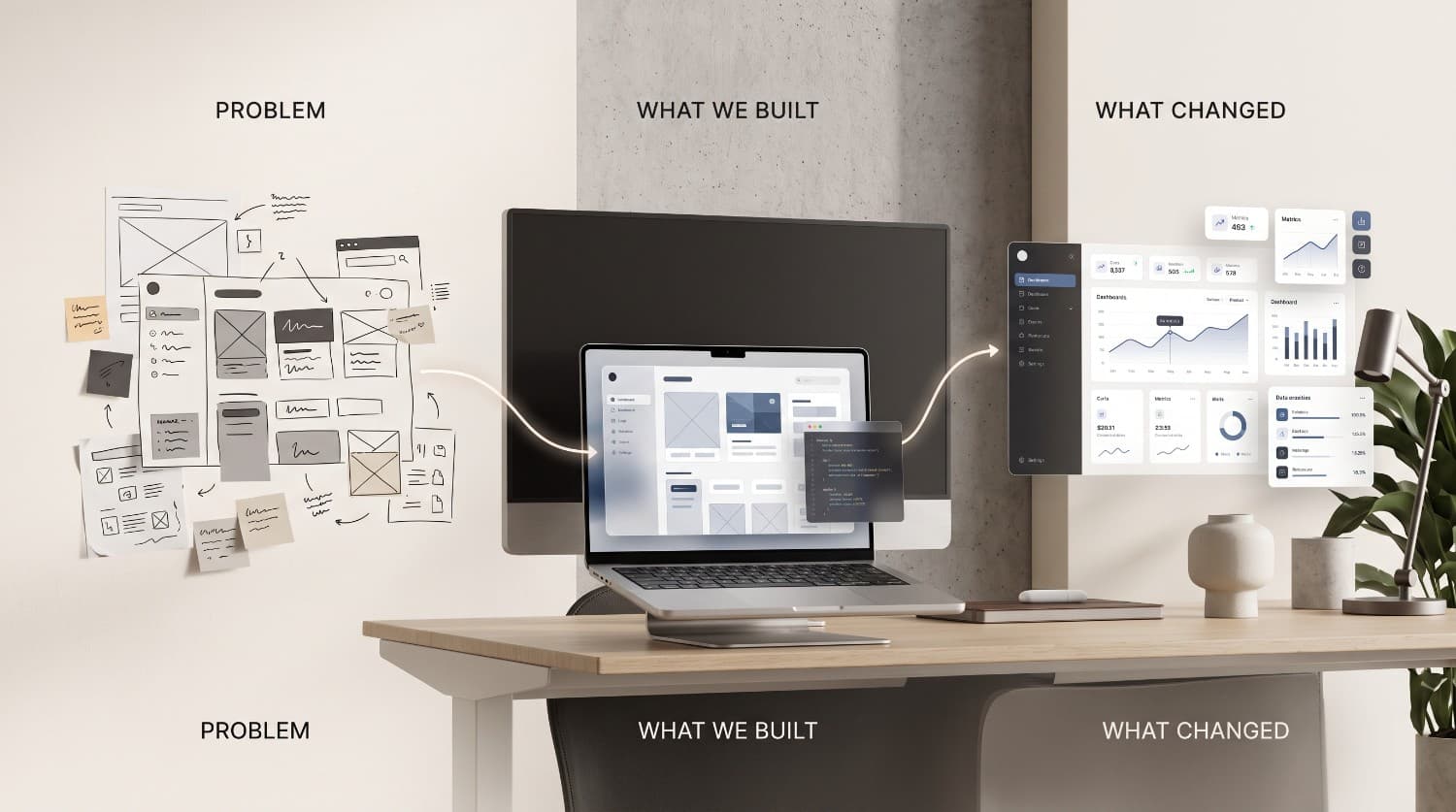
For a decade, Figma has been the default studio canvas. It gave us real-time multiplayer, neat auto-layout, and pixel-precise component variants. But as web applications grow more dynamic, Figma's biggest limitation has become impossible to ignore: a vector canvas doesn't have a DOM.
Static frames cannot render true fluid typography clamps. They cannot preview how a layout behaves when dynamic database content overflows. And they cannot show how a sticky element feels under real touch scrolling.
That is why our studio has shifted our core exploration phase from static frames to functional, interactive browser prototypes.
The Illusion of the Perfect Frame
In a design tool, every text box has ideal character lengths, every photo has identical aspect ratios, and viewports snap to neat 1440px and 375px boundaries.
Real production environments are chaotic. Displays range from 320px foldables to 4K ultra-wides. Operating systems render fonts with subtle weight differences. Users configure custom text scaling in their browser settings.
Designing directly in the browser reveals these edge cases on day one, before engineering teams start building production infrastructure.
Bridging the Gap with Code-First Design
By pairing Tailwind CSS, modern CSS container queries, and lightweight Next.js preview environments, our designers explore layout decisions directly in rendered HTML.
Transitions, hover states, scroll-driven timelines, and focus rings are tested in real time. The resulting deliverable isn't a static drawing that engineers must reverse-engineer—it is production-ready code with documented behavior.
“When designers touch the real medium, design critiques stop being about subjective aesthetics and start being about real user utility.”
Listen to the Functional Branding Podcast
A deep-dive conversation between our creative directors and frontend leads on bridging the gap between brand identity and software execution.
Episode #14: Experience Over Campaigns
24 mins · NILMOTECH Design Radio
More Perspectives
Related posts

Your Brand Isn’t Static—It Lives in the Experience
How the NILMOTECH Functional Branding Method Builds Stronger Brands Through Product, Not Just Campaigns
How Do You Evaluate a UX/UI Design Partner Beyond the Portfolio?
A practical scorecard for growth-stage leaders covering technical depth, team continuity, outcomes, and the questions that separate partners from vendors.
Webflow vs. Custom Next.js: Choosing the Right Platform to Scale Without a Ceiling
No-code builders help teams launch fast, but custom React architecture gives scaling brands the flexibility to grow without hitting platform roadblocks.